

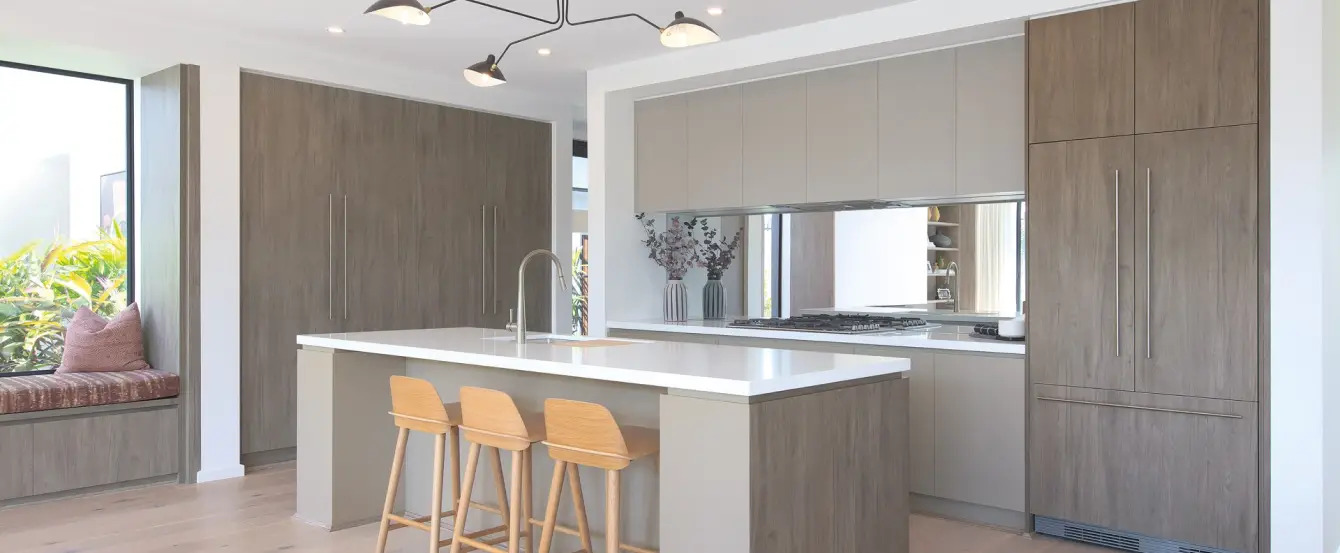

Planning your dream kitchen reno is exciting — until someone mentions council approval and suddenly you're not sure if you need to file paperwork before you can pick out benchtops. We get it. It's one of the most common questions we hear from Sydney homeowners, and the answer isn't always a simple yes or no.
At Paradise Kitchens, we've been designing and building kitchens in Sydney for over 43 years. We've helped thousands of homeowners navigate exactly this question — and in this guide, we're going to walk you through everything you need to know about council approval for a kitchen renovation in Sydney, clearly and without the legal jargon.
The Short Answer: It Depends on the Scope of Work
Most standard kitchen renovations in Sydney do not require council approval. However, certain types of work — particularly anything that affects the structure of your home, changes its footprint, or involves significant plumbing and electrical rerouting — may require either a Development Application (DA) or a Complying Development Certificate (CDC).
The key is understanding what category your renovation falls into before you start swinging hammers.
What Is a Development Application (DA)?
A Development Application is a formal request to your local council seeking approval to carry out building or renovation work. In New South Wales, DAs are assessed under the Environmental Planning and Assessment Act 1979 and managed by your local council.
They typically involve:
- A detailed set of architectural drawings prepared by a qualified draftsperson or architect.
- A Statement of Environmental Effects explaining the impact of your project.
- Neighbour notification periods and a public comment phase.
- Assessment fees payable to the council.
- Processing times that can range from weeks to several months.
For most straightforward kitchen renovations, this level of approval is simply not required — but it's always wise to check with your specific local council or a certifier before you begin.
What Is a Complying Development Certificate (CDC)?
A CDC is a faster, streamlined alternative to a DA. If your renovation meets a specific set of predetermined standards under the State Environmental Planning Policy (Exempt and Complying Development Codes) 2008, it can be approved by a private accredited certifier — often within days.
A CDC may be required for kitchen renovations that involve:
- Structural changes such as removing or relocating a load-bearing wall.
- Significant additions or extensions to the kitchen footprint.
- Major changes to the external appearance of the building.
Again, many kitchen renovations don't fall into this category either — but if yours involves structural work, you'll want to speak with a certifier before you begin.
When Does a Kitchen Renovation NOT Require Council Approval?
Here's the good news: the vast majority of kitchen renovations in Sydney fall under what NSW legislation calls exempt development — meaning no council approval is required at all.
Your renovation is likely exempt if it involves:
- Replacing or upgrading kitchen cabinetry without altering the layout or footprint of the room.
- Installing new kitchen benchtops in the same location as the existing ones.
- Updating kitchen appliances such as ovens, rangehoods, cooktops, and dishwashers.
- Swapping out an old kitchen sink and tapware for new fixtures in the same position.
- Refreshing kitchen splashbacks, flooring, or painting walls.
- Fitting new cabinet doors, handles, and drawer systems within the existing cabinet framework.
In short, if you're updating the look, feel, and function of your kitchen without touching the structure of the home, you almost certainly don't need any council approval. This covers a huge range of kitchen renovations that Paradise Kitchens carries out for Sydney homeowners every single week.
When DOES a Kitchen Renovation Require Approval?
There are specific scenarios where you will need to obtain approval before work begins. These include:
Structural Changes
- Removing or relocating a load-bearing wall to open up the kitchen to a dining or living area.
- Adding a structural beam or post as part of your renovation design.
- Cutting new openings in external walls for windows or doors as part of the kitchen redesign.
Significant Plumbing Relocation
- Moving the kitchen sink to a completely different wall or location in the room may require a plumbing permit and, in some cases, council notification.
- Installing new drainage lines that connect to the stormwater or sewer system beyond minor adjustments.
Electrical Upgrades
- Adding new circuits or upgrading your switchboard to accommodate additional kitchen appliances may require a licensed electrician to submit a compliance certificate (not council, but regulatory).
- All electrical work in NSW must be carried out by a licensed electrician who issues a Certificate of Compliance for Electrical Work (CCEW).
Heritage-Listed Properties
- If your home is heritage-listed or located within a heritage conservation area, nearly any external or significant internal changes will require council approval — and approvals can be strict.
- Even internal kitchen changes may require a Heritage Impact Statement in some cases.
- You should contact your local council's heritage officer early in the planning process if your property has any heritage listing.
Strata Properties
- If you live in an apartment or townhouse within a strata scheme, you will typically need written approval from the Owners Corporation before beginning any renovation work — even if council approval isn't required.
- Strata bylaws vary considerably between buildings, so always check your specific scheme's rules.
Does Moving the Kitchen Require Council Approval?
This is a great question — and the answer is almost always yes, or at least CDC-level approval. Relocating your kitchen to a different room or area of the home involves significant structural, plumbing, and electrical work that goes well beyond exempt development thresholds.
If you're considering a custom made kitchen that involves completely relocating the kitchen space, we strongly recommend engaging a building certifier or contacting your local council before committing to the design.
Sydney Council Areas and Their Specific Requirements
It's worth noting that while NSW state legislation sets the overarching framework, individual councils can have their own additional requirements — particularly around heritage, flood-prone land, or bushfire-prone areas.
Some Sydney council areas where additional requirements may apply include:
- City of Sydney Council — particularly strict for inner-city terraces and heritage conservation areas.
- Northern Beaches Council — flood overlay maps may affect renovation scope near waterways.
- Blacktown City Council — specific requirements for bushfire-prone land in outer western suburbs.
- Ku-ring-gai Council — extensive heritage conservation areas covering many residential streets.
We always recommend checking directly with your local council's planning department or engaging a private certifier to confirm your specific obligations before starting your renovation.
Who Can Help You Navigate the Approvals Process?
If you're unsure about what approvals you need, here are the professionals who can assist:
- A private building certifier — can assess your plans and confirm whether you need a DA, CDC, or nothing at all.
- A registered architect or draftsperson — can prepare compliant documentation if a DA or CDC is required.
- Your local council's duty planner — most councils offer a free pre-lodgement advice service where you can ask general planning questions.
- A licensed builder — an experienced builder will flag approval requirements as part of the project scoping process.
At Paradise Kitchens, our design team works with homeowners from the very first consultation to help them understand what's involved in their renovation — including flagging when approvals may be needed so there are no nasty surprises mid-project.
Practical Tips Before You Start Your Kitchen Renovation
Here are our top tips for staying on the right side of the rules when planning your kitchen reno:
- Always confirm your property's zoning and heritage status before committing to a design — a quick call to council or a search on the NSW Planning Portal takes minutes and could save you significant headaches.
- Hire licensed tradespeople for all plumbing and electrical work — compliance certificates from licensed tradespeople are a legal requirement in NSW and protect you when you sell your home.
- Keep records of all approvals and compliance certificates — store these safely as they will be required by a conveyancer if you ever sell the property.
- Don't assume because your neighbour renovated without approval that you can too — every property is different and unauthorised works can result in fines, orders to demolish, and complications when selling.
- Budget for approvals if your project requires them — DA fees, certifier fees, and architectural drawings all add cost, so factor these into your overall kitchen renovation budget. Our detailed guide on planning your kitchen renovation budget can help you plan for every cost involved.
What About Choosing the Right Contractor?
One of the best ways to avoid approval headaches is to work with an experienced, reputable kitchen renovation company who knows the lay of the land. When choosing your contractor, make sure they:
- Hold a current NSW Builder's Licence.
- Have a clear process for identifying whether approvals are required.
- Work with licensed plumbers and electricians who issue proper compliance certificates.
- Carry adequate insurance including public liability and home warranty insurance for projects over the relevant threshold.
Understanding how to choose the right kitchen renovation contractor in Sydney is a critical first step in ensuring your project runs smoothly, legally, and on budget.
The Bottom Line
For the vast majority of Sydney homeowners renovating their kitchen — updating cabinetry, benchtops, splashbacks, appliances, sinks, and taps — no council approval is required. The renovation falls under exempt development, and you can get started once you've engaged your licensed tradespeople and chosen your designs.
However, if your project involves structural changes, major plumbing relocation, heritage property considerations, or strata approval requirements, you'll need to do a little more groundwork before the first cabinet goes in. Taking the time to confirm your obligations upfront will save you time, money, and stress down the track.
At Paradise Kitchens, we've been helping Sydney families create beautiful, functional kitchens for over four decades. Our experienced team will guide you through every stage of the process — from design consultation right through to the final installation — ensuring everything is done properly, professionally, and to the highest standard.
Ready to start planning your kitchen renovation? Whether you have questions about the approvals process, want to explore design options, or you're ready to get a quote, our friendly team is here to help. Get in Touch with Paradise Kitchens today, and let's bring your dream kitchen to life — the right way.


